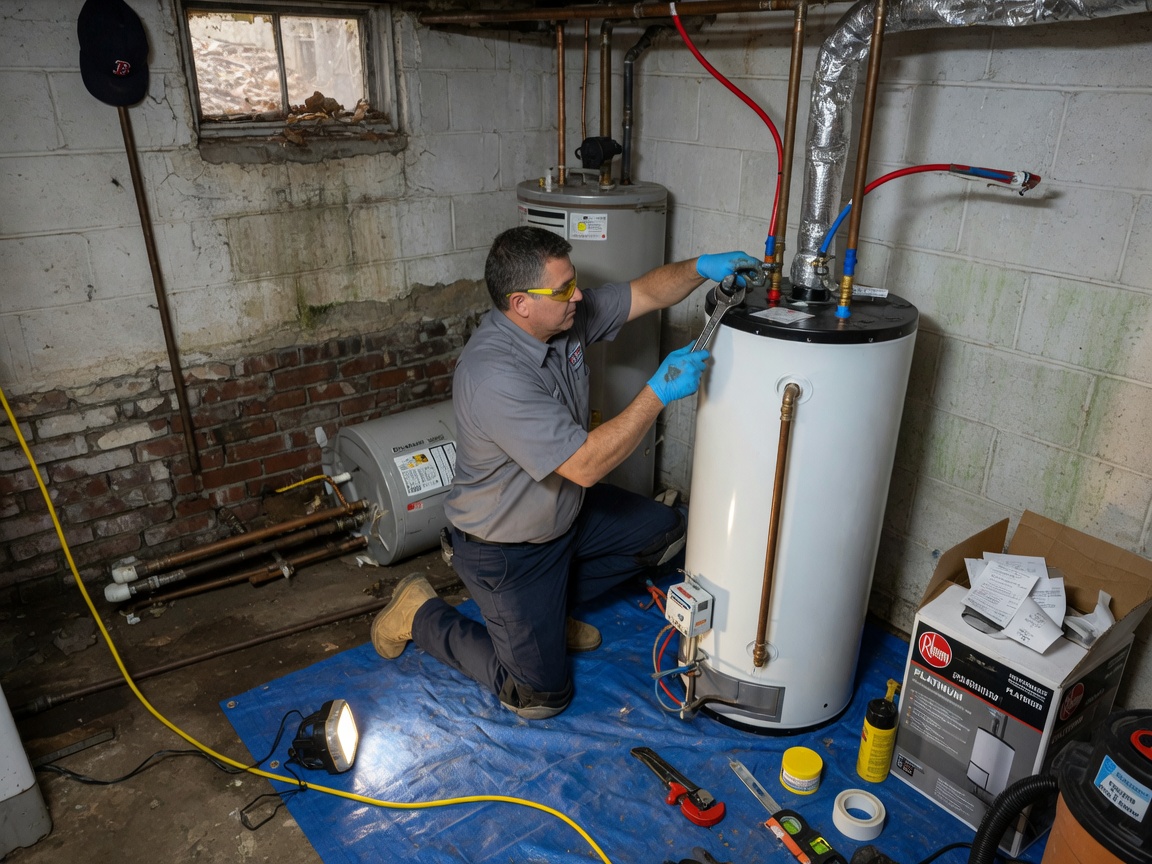
Boston's older housing stock in the South End, North End and Beacon Hill often features narrow stairwells, low ceilings and outdated venting that complicate new water heater placement. Installers must frequently disassemble units on site or use specialized dollies to maneuver tanks through tight doorways without damaging plaster or original woodwork. Proper seismic strapping and combustion air calculations are required under Suffolk County codes, especially in buildings converted from coal or oil heat.
The Atlantic-moderated humid continental climate brings cold winters that increase demand on water heaters while salt air accelerates corrosion on exposed piping and vents. Homes near Boston Harbor or in East Boston and Charlestown see faster tank degradation, so technicians often recommend anode rod upgrades and dielectric unions during installation. Nearby Cambridge and Somerville row houses present similar access issues plus stricter energy code enforcement on new equipment efficiency ratings.
Installation crews routinely check for shared flues in multi-family buildings common in Dorchester and Jamaica Plain, verifying draft and CO safety before leaving the site. In Allston and Brighton, basement access can involve steep exterior stairs or alleyways that affect equipment handling and job timing. These local conditions determine whether a standard tank or tankless unit fits without major modifications to existing gas or electrical service.
Technician insight
In Boston, the thing that catches most people out with Water Heater Installation is the narrow, winding stairwells in Beacon Hill and South End brownstones that force on-site disassembly of the old tank and limit tankless mounting locations.
North End Row House Swap
Homeowner called after the existing tank began leaking into the basement. Assessment showed corroded galvanized lines and insufficient combustion air for the current setup. Crew replaced the unit with a direct-vent model, rerouted venting through an exterior wall, and added dielectric unions to protect new piping.
Water Heater Installation Services We Offer
✓Tankless Water Heater Installation
Compact units mounted on exterior walls in tight Beacon Hill and Back Bay spaces where floor area is limited.
✓Electric Water Heater Installation
Replacement of older resistance models in South Boston and Roxbury homes converting from gas service.
✓Gas Water Heater Installation
Direct-vent and power-vent models sized for Fenway Park area multi-family buildings with shared venting.
✓Hybrid Heat Pump Water Heater Installation
Energy-efficient units installed in conditioned basements of Jamaica Plain and Brookline residences to meet newer efficiency standards.
✓Expansion Tank Installation
Required add-on for closed-loop systems in Cambridge and Somerville homes with newer backflow preventers.
Water Heater Installation Cost in Massachusetts
| Service | Typical Range | What Affects It |
|---|---|---|
| Standard Tank Replacement | $1,200–$2,100 | Higher in Beacon Hill and Back Bay due to stair access |
| Tankless Installation | $2,400–$3,800 | Includes venting and gas line upgrades common in older homes |
| Electric To Gas Conversion | $1,800–$2,900 | Requires new line and permits in Suffolk County |
| Hybrid Heat Pump Unit | $1,900–$2,700 | Basement space and condensate drain affect final cost |
Ranges are typical for Massachusetts and confirmed with an exact written quote before any work starts.
How it works
- 1
Site Assessment
Measure access routes, check existing venting and gas line capacity, and note any code issues in historic structures.
- 2
Equipment Selection
Match tank or tankless size to household demand while accounting for narrow doorways and stairwell constraints.
- 3
Removal And Prep
Safely drain and disconnect the old unit, then modify piping or venting as needed for the new model.
- 4
Installation And Testing
Set the new heater, connect utilities, install required safety devices, and verify operation and draft.
Pricing
Upfront quotes given after on-site assessment of access and existing connections.